
The First Harvest: Lammas
Lammas: A Quiet Pause Before the Harvest
On the farm, Lammas is a quiet, subtle pause. Everything’s been planted, the early summer rains have passed, and the weeds have slowed their relentless onslaught. The vegetables are growing steadily, the produce is ripening in the fields, and for the first time since spring, we can take a breath.
It’s not a season of rest—there’s still plenty to do—but the rhythm shifts. This is the moment when we begin to see which crops will be abundant and which ones have struggled. Quietly, we start to plan: menus for the restaurants, what we’ll use for pickles or jams, what herbs will be dried for tea and medicine, and what will be stored away for winter.
Lammas also marks the first hint of the approaching autumn. The evenings grow just a bit shorter, and the light takes on a slightly different quality. You can see some of the trees just beginning to turn—the early ones showing a whisper of color. Summer still holds the land, but autumn is already waiting at the edges.
In the Wheel of the Year, Lammas (or Lughnasadh) is the first of the three harvest festivals, traditionally tied to the grain harvest. In old agrarian communities, this was a time to celebrate the first loaves baked from the season’s grain, to give thanks for abundance, and to acknowledge the work still ahead. The name “Lammas” comes from “Loaf Mass,” a nod to those first offerings of bread.
In my coven, we love Lammas (and its winter counterpart, Imbolc) for exactly this reason: these are Sabbats that are quietly reflective. They don’t call for elaborate gatherings, excessive preparation, or the outward consumerism that can sometimes creep into other holidays. Lammas asks for presence, gratitude, and a little space to listen to the turning of the year.
Before Circle: Gathering & Crafting
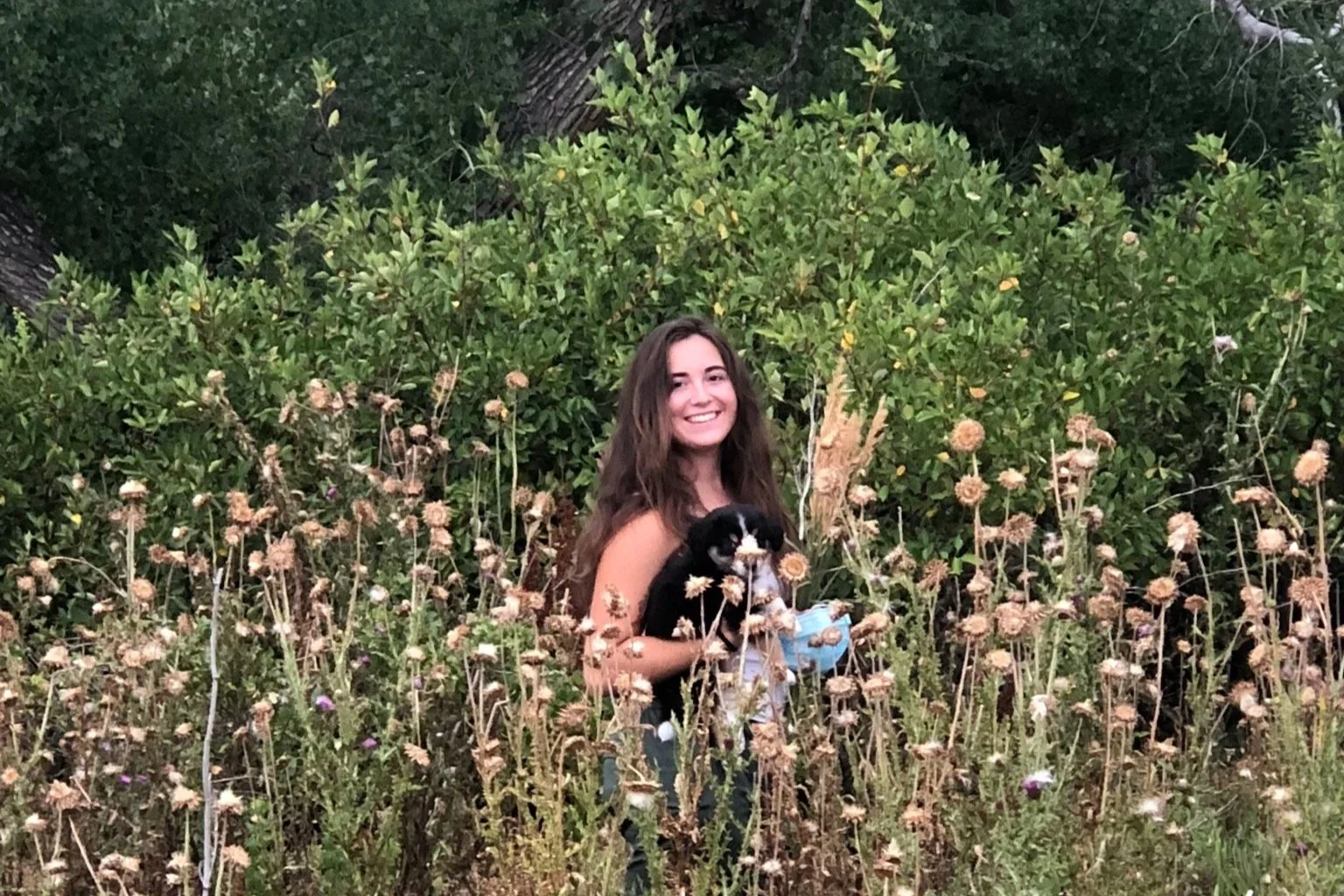
Before we open circle, we take time to gather the materials we’ll need. This is one of my favorite parts of Lammas—walking the farm, noticing what’s in bloom, what’s gone to seed, and what feels abundant this year. The sun is still strong but carries a softer edge, and you can smell hay drying in the fields. Everyone collects what calls to them: vines, herbs, flowers, leaves, and grasses.
We use these to create both our Seasonal Abundance Decorations (wreaths, moons, stars, or other shapes to hang on doors or altars) and our Offerings to the Waters (small, natural blessings made to return to the river). Making them before circle allows us to settle into the rhythm of the day, hands busy, hearts grounded, surrounded by the scent of fresh plants and the hum of late summer.
Seasonal Abundance Decorations
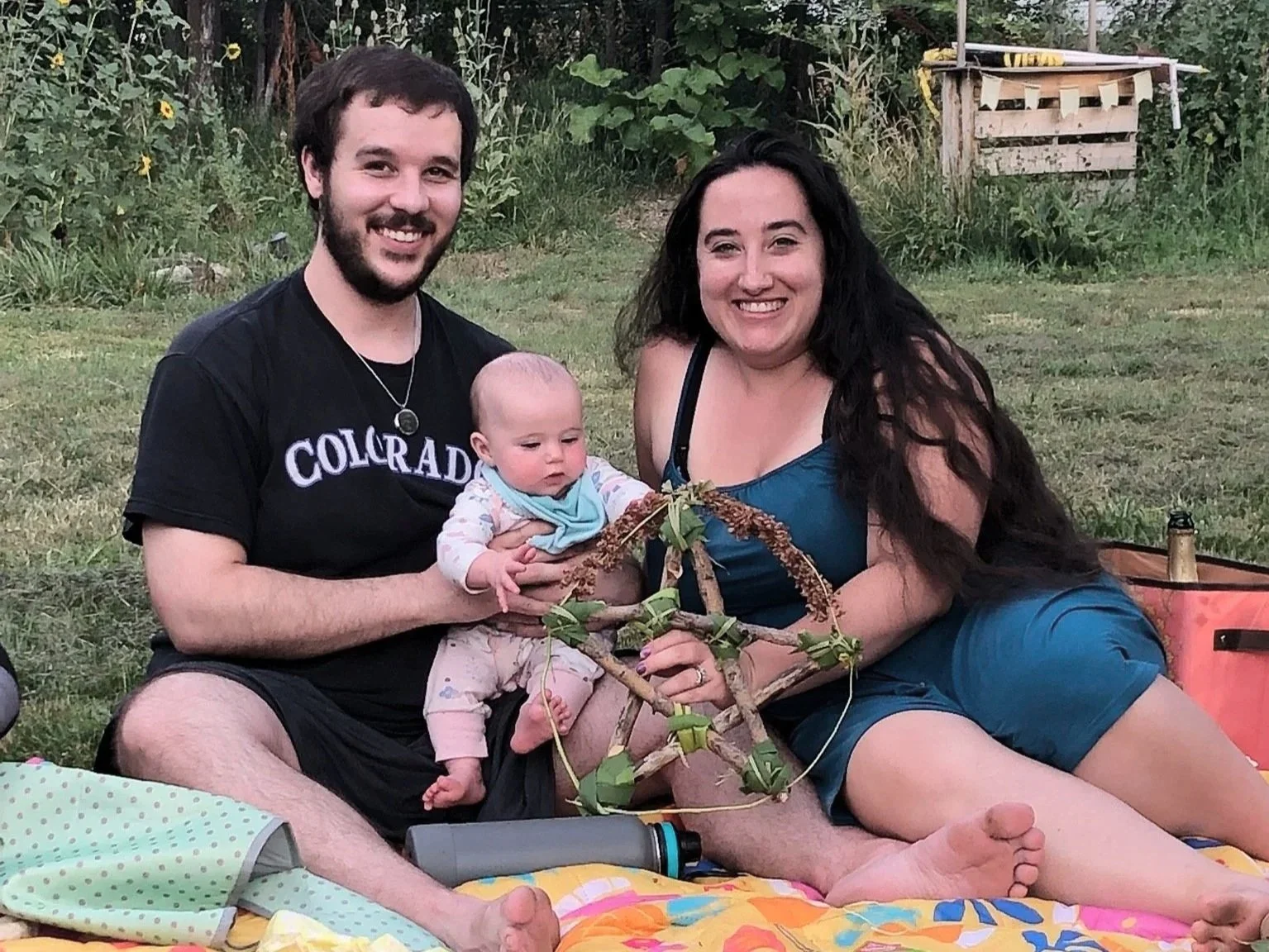
Every Lammas, I like to create a seasonal blessing ornament—something that captures the abundance of this moment in the year. Often they take the form of a wreath, but they might be shaped like a moon, star, heart, or whatever feels right that year. The frame is usually made from grapevines or young willow branches, woven into shape, then dressed with seasonal plants from around the farm.
The act of gathering materials is part of the magic. As I walk the land, I notice which plants are still in bloom and which have gone to seed. It’s a perfect Lammas reflection: summer still thriving, autumn already on the horizon. The finished ornament hangs in the house, on the barn door, or in the circle—its purpose is to invite abundance, protection, and blessings into the season ahead.
One of my favorite touches is adding a corn dolly to the center of the wreath. We don’t grow corn here, but in late July I buy fresh corn on the cob and save the husks. After drying them, I soak them before Lammas so they’re pliable enough for crafting. Depending on your skill (and patience), you can make a single dolly or an entire little family.
These wreaths don’t just end with Lammas—they can become part of your seasonal cycle. I often keep mine through the autumn and winter, then burn it ritually at Yule, Imbolc, or Ostara as a way of releasing the year’s blessings back into the turning of the wheel.
(If you don’t have grapevines or willows, you can still make a beautiful Lammas decoration. A craft hoop or wire frame works just as well, and the greenery can come from a local park, a market bouquet, or even your herb garden. Corn husks can be purchased at many grocery stores or Latin markets, and the magic is in the making—not the source of the materials.)
In Celebration of Wheat
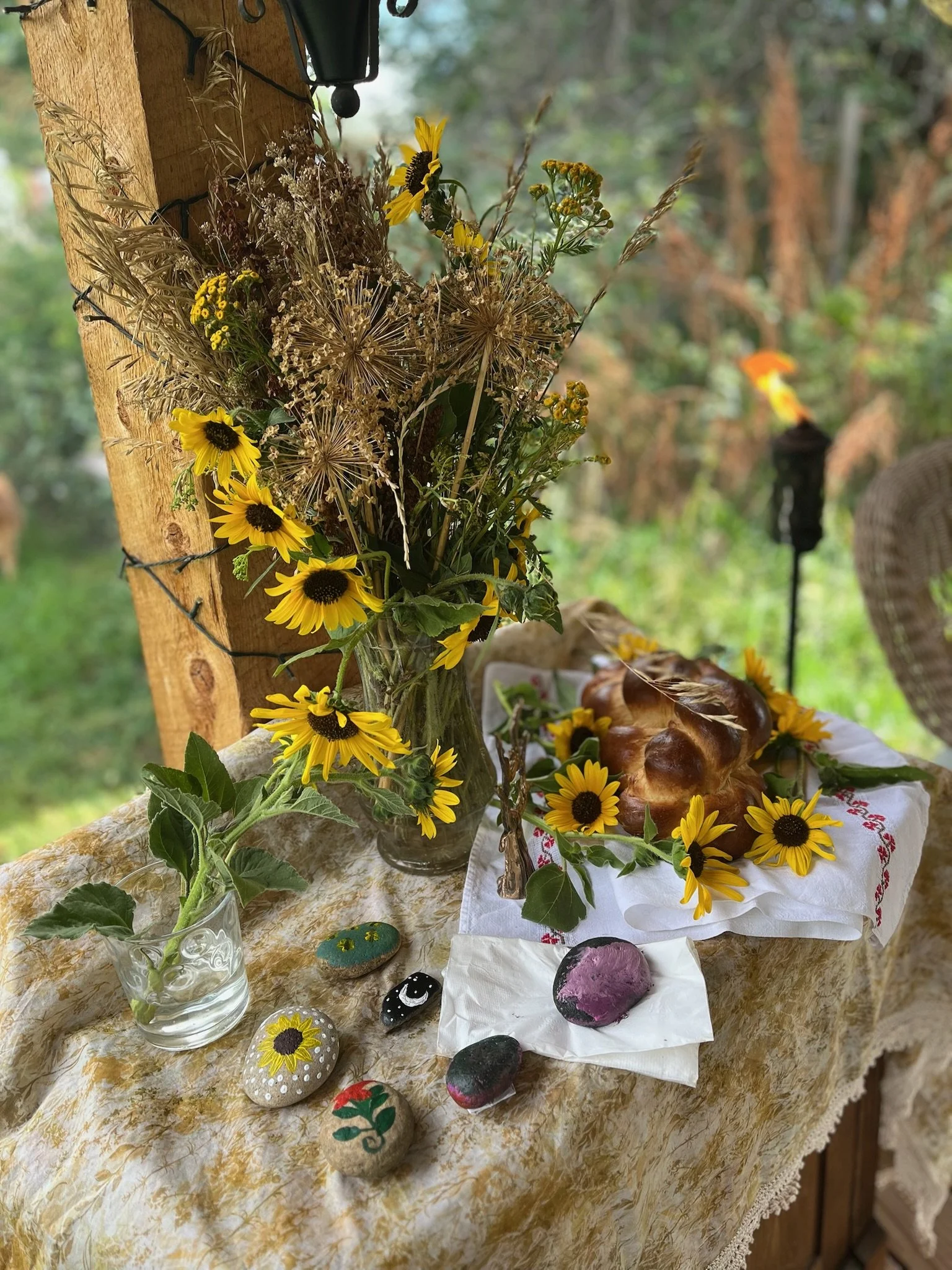
Grain has been at the heart of human survival for thousands of years. Lammas is the first of the harvest festivals, a time when people would bake the first loaves from the new grain and give thanks for the food that would sustain them in the months ahead.
Baking isn’t my strength, but I’m lucky to have coven sisters who love it. One of them always takes this time to make a traditional Swiss braided bread called Zopf. It’s a beautiful golden loaf, brushed with egg wash so the braid shines, and the sight and smell of it awakens our connection to our ancestors.
In circle, we break the bread together, taking a moment to really taste it. It’s a pause to think about how important grain is—not just here and now, but for thousands of years, across every culture. Lammas reminds me that bread connects us to the land, to the people who came before us, and to each other.
(If baking isn’t your strength, you can still honor Lammas with grain. Pick up a lovely loaf from a bakery or bake something simple at home. The magic is in breaking bread with intention, not in perfect braids or recipes.)
The Lammas Water Rite -
Ritual Crossing of the Waters
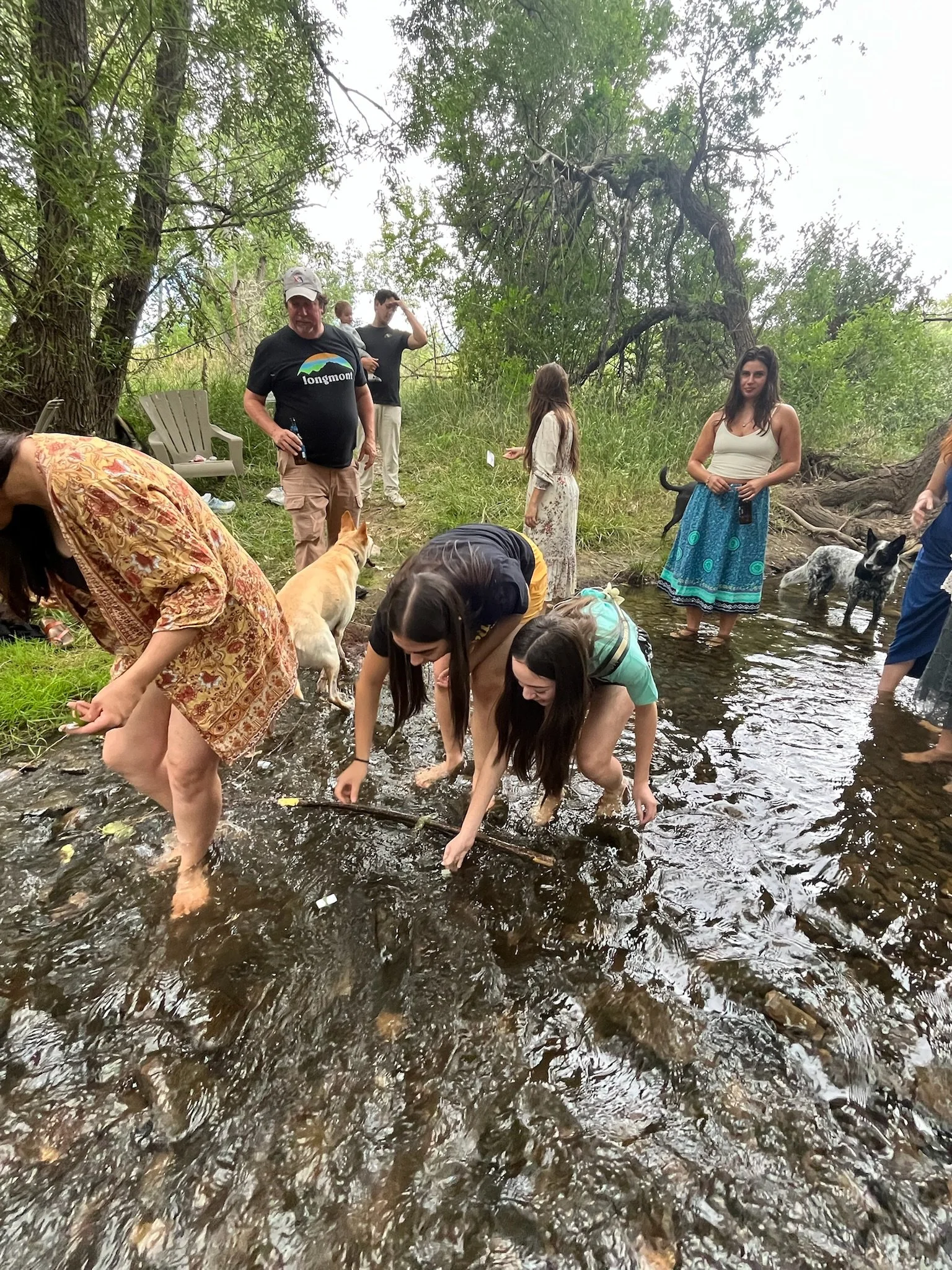
Somewhere along my Wiccan path, I learned it was traditional at Lammas to cross running water. We’re lucky to have a beautiful creek flowing through the farm, so this has become one of our favorite Lammas traditions.
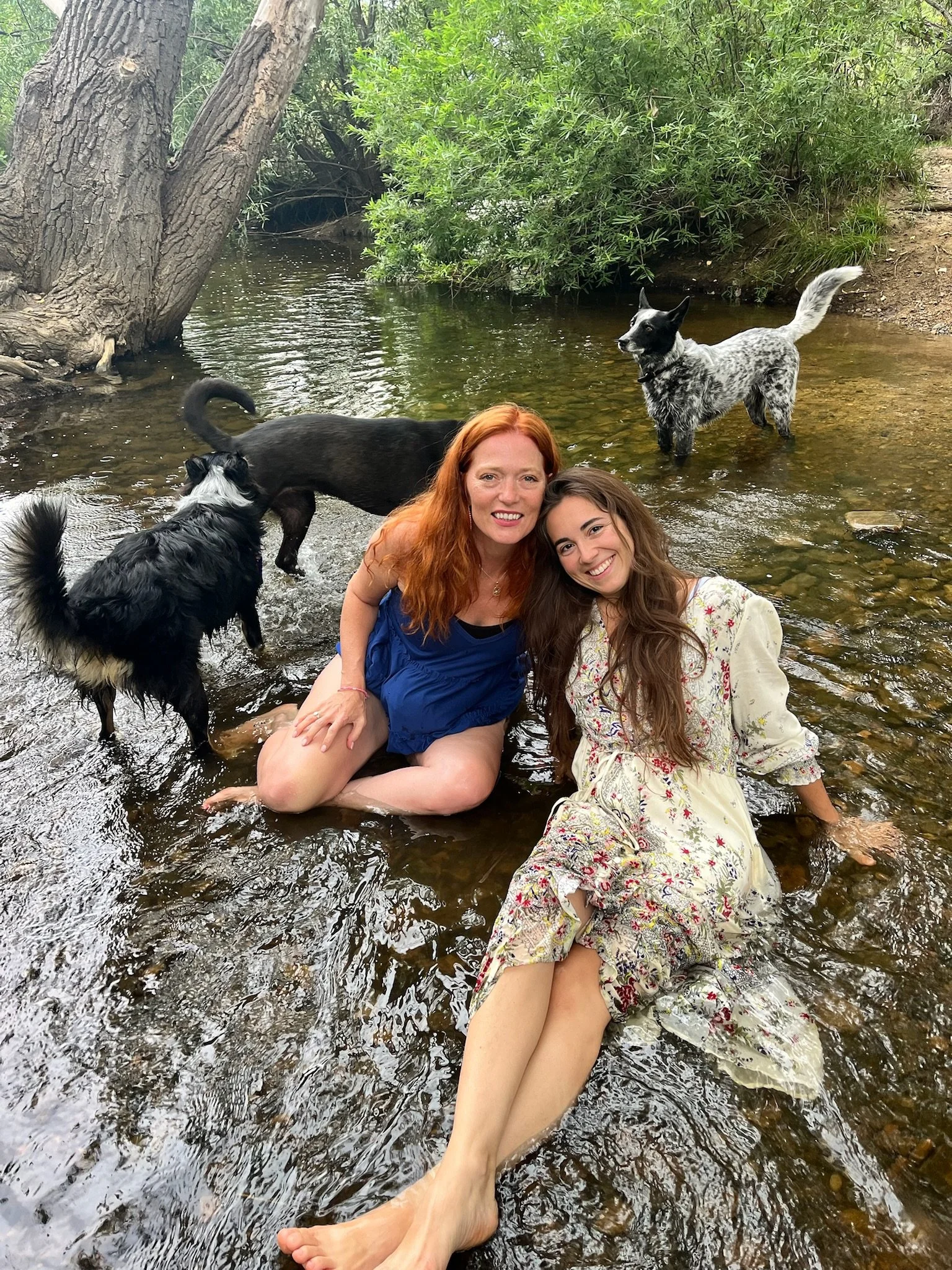
Early August in Colorado is usually scorching hot, so what starts as a symbolic crossing almost always turns into a full wade—or even lying right down in the water. It’s a chance to let the creek wash away whatever we’ve been holding onto through the summer, making space for the new season ahead. It’s also a reminder of that old saying, “water under the bridge”—to let things pass, to release grudges, to stop carrying what no longer serves us.
The dogs always join us, splashing and barking, adding to the laughter and joy. Lammas isn’t a robed sabbat for us, but we do wear our seasonal witchy clothes, with something practical underneath for getting wet and muddy.
(If you don’t have a river nearby, you can still bring the magic of this ritual into your Lammas. If possible, travel to a park or natural place with flowing water—there’s something powerful about working with water as it moves. For the city witch, a ritual bath or shower can hold the same intention. As the water flows over you, visualize it carrying away what you no longer need, letting old hurts and heaviness flow downstream, out of your body, and out of your life.)
Offerings to the Waters
Before we open circle, we gather natural materials from around the farm—sweetgrass, herbs, flowers, seed heads, leaves. These become small, handmade offerings for the river. Everything we use is natural and will return to the water without harm—no wire, no glue, nothing that wouldn’t belong in the river.
The offerings are simple but full of intention. Sometimes we tie flowers to a slender stick with sweetgrass (no, sweetgrass doesn’t grow native here, but we plant some at the farm for just reasons like this, and also to make beautiful sweetgrass braids), sometimes we wrap blooms or seeds in a large leaf or milkweed pod and roll them into a little blessing package. As we make them, we weave gratitude into each one—thanks for the abundance of the season, for the land that sustains us, for the water that nourishes it all.
When we open circle, these offerings are blessed along with everything else we’ve crafted. After we cross the creek, they are released into the water. Watching them float downstream is always a moment of quiet reflection—a reminder of reciprocity. The land gives so much; this is one way we give something back. It’s also a living expression of “water under the bridge”—letting things pass, releasing what we no longer need to carry.
(If you don’t have a river or stream nearby, you can still honor this tradition. Make a small natural offering and place it in a bowl of water, letting it sit in the sun or under the moon before returning the materials to the earth. The magic is in the act of giving back, wherever you are.)
Painted River Stones
After crossing the creek, each person chooses a small stone—sometimes one they’ve brought from home, sometimes one found along the riverbank. These stones become another offering, but one created during the circle itself.
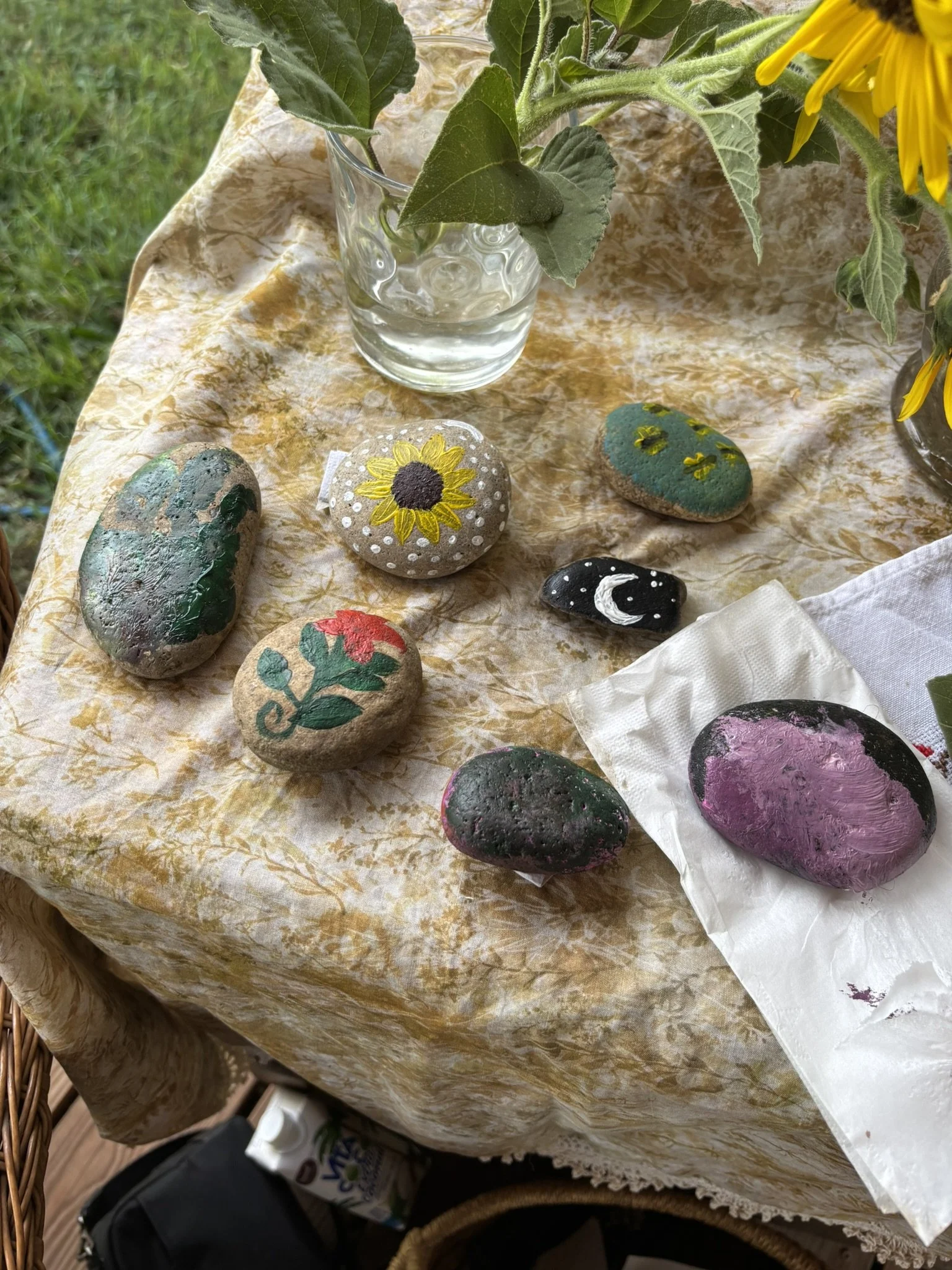
We set up a simple painting station with acrylic paints and a clear spray finish. As the ritual continues, each person decorates their stone—adding symbols, colors, or designs that feel meaningful in the moment. The act of painting is meditative, a way to hold the energy of Lammas in your hands for a while.
Later, during the gathering after circle, each person places their painted stone somewhere on the farm as a gift to the land. The best part—especially for the kids—is the “hiding” of the stones. It’s like leaving a private message for the Goddess, a secret treasure that only they know about. Younger children often do this with a parent, and as they grow older, it becomes something they can do themselves.
(If you don’t have a river nearby, you can adapt this ritual by choosing a stone that’s meaningful to you and decorating it at home. Place it somewhere special—in a garden, a park, or even on a windowsill—where it can serve as your offering to the land.)
Lammas is a time to quietly sit with the abundance of summer, knowing the wheel is already turning toward autumn. It’s a reminder that we’re part of this cycle, moving with the seasons just like everything around us. Noticing the light shift, the fields ripen, the first leaves turn—these simple moments connect us to the land we live on. And in that connection, we find a kind of balance and steadiness that makes us feel more whole.
A Lammas Table
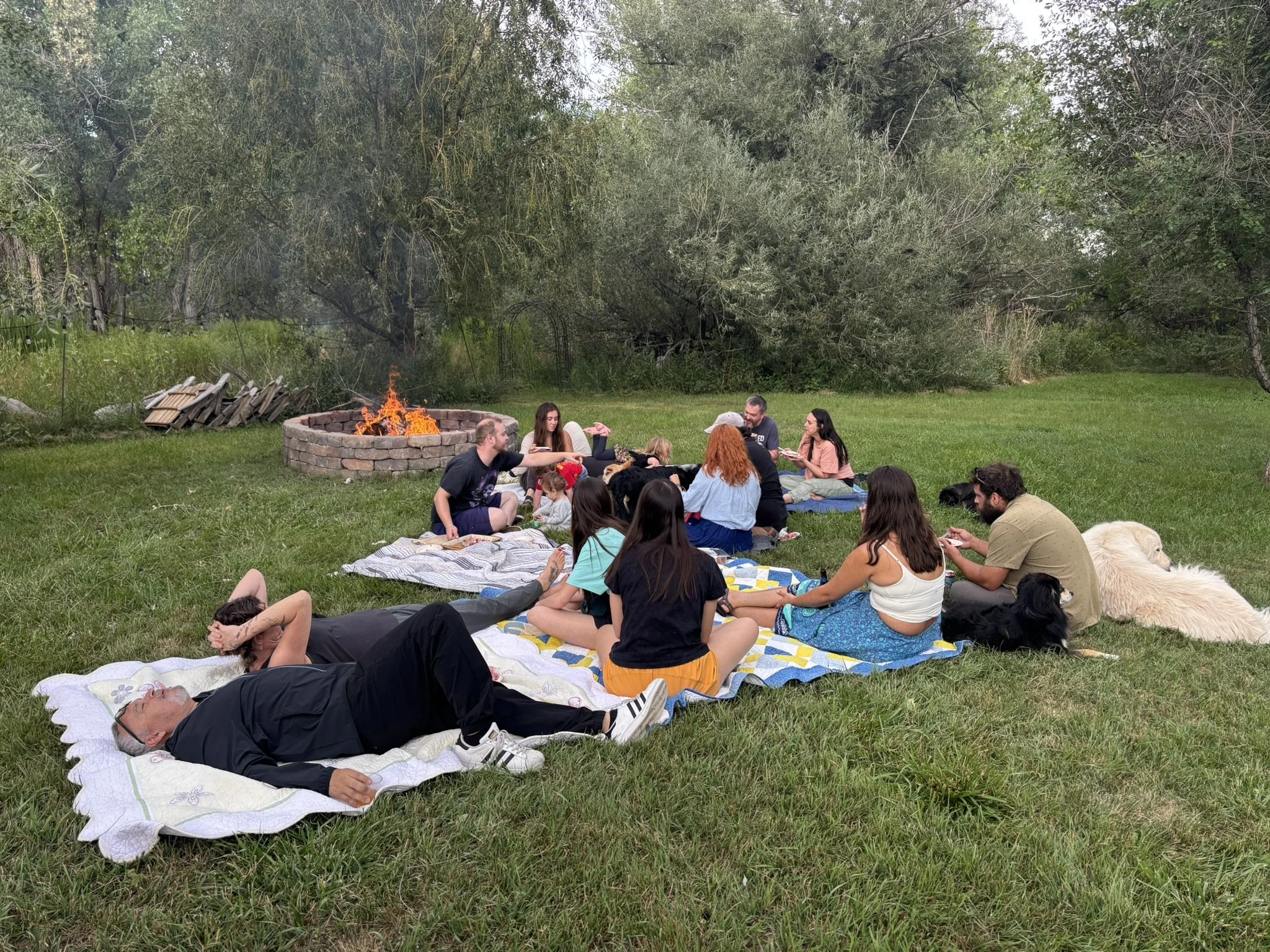
After circle, we gather to share food that celebrates the season. Our Lammas potluck is always simple, hearty, and built around what’s abundant right now.
Zucchini bread is a favorite—sweet, moist, and made from one of summer’s most prolific vegetables. A flatbread station makes it easy for everyone to build their own plate, with baskets of warm pita, roti, or naan alongside fresh toppings. August is peak tomato season in Colorado, so we slice them alongside cucumber salad, fresh herbs, onions, cheeses, roasted vegetables, and maybe some cold cuts or spreads.
And of course, no Lammas table feels complete without something sweet. In August, that means Colorado peaches—baked with berries into a crisp that tastes like late summer in every bite.